Lab Grown Diamonds for Beginners
Table of ContentsGet This Report about Lab Grown DiamondsLab Grown Diamonds Can Be Fun For Anyone10 Easy Facts About Lab Grown Diamonds ExplainedOur Lab Grown Diamonds Ideas
As you take a trip closer to the Planet's core, stress and temperature increase, which produces the ideal oven for carbon to be transformed into diamond (diamonds are the only gemstone to be made from simply one element). Via an enormous volcanic eruption, these diamonds were transferred to the Planet's surface. It's approximated this procedure was rather quick (probably over the program of numerous hours), which enabled the rubies to stay intact without melting.The short solution: carat weights gauge the mass of stones, karats determine the purity of gold. Carat weight: 1 carat weight amounts to 0.2 grams, about the weight of a paperclip (next time you see a photo of Mariah Carey's 35 carat interaction ring, simply imagine the worry of carrying 35 paper clips around your finger on a daily basis).
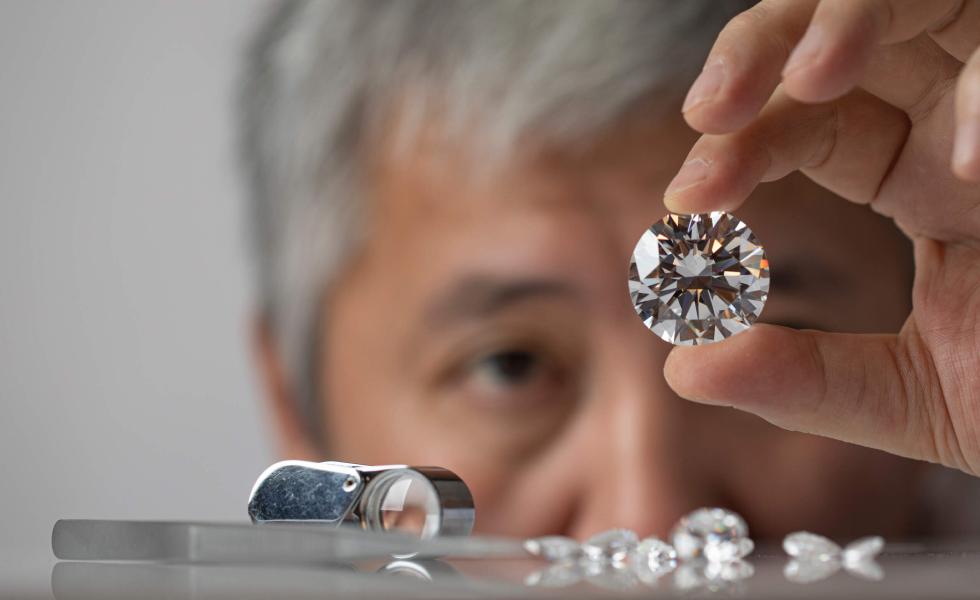
Below are several of the key advantages of laboratory expanded rubies and lab grown up diamond jewellery:.
A Biased View of Lab Grown Diamonds
Put merely, natural or earth-mined rubies are crafted over countless years beneath the Earth's crust from pure carbon integrated with pressure and warmth. Producing rubies in a laboratory calls for the exact same procedure, just fine-tuned to occur over a much smaller sized timespan in a far more controlled setting.
Whereas earth-mined diamonds are unusual and finite and often tend to boost in rate over time, lab diamonds are easily available., like lab-grown diamond rings, they won't be a good fit for your requirements.
They could think that the disadvantages of lab-grown rubies outweigh the pros. Some might argue that, for this reason, buying a lab-made ruby also comes with its moral considerations, as doing so takes revenue away from those entailed in the natural diamond sector that may require it most.
Traditional rubies count on the Planet's problems to identify their top quality or absence thereof. In a lab, manufacturers can directly control a diamond's high quality. Yes, there are honest and environmental factors to consider with both extracted and manufactured diamonds. Mean your budget only enables you to buy certain shades or cuts of natural diamonds.
The Buzz on Lab Grown Diamonds
You can quickly locate tinted, man-made diamonds on the (fairly) low-cost side as well as particular cuts that would be costlier if you were shopping for an extracted ruby only. That rarely indicates it isn't worth shielding.
natural diamonds is that the latter is mined from all-natural down payments in the Earth while the previous is made in a lab using regulated setups. Their high quality is mainly the same. While the distinction between lab-grown and all-natural diamond options are minimal when it involves high quality, a few of the drawbacks of lab-grown rubies include the fact that the stone will decrease gradually and, to some, a lack of sentimental worth that's typically connected with mined rubies
The process entails very little land disruption and removes concerns connected to logging and habitat damage. Lab-grown rubies are commonly a lot more inexpensive than natural rubies. This price difference can be check here connected to the structured manufacturing process and the evasion of costs connected with typical mining. The Controlled Environment in Which Laboratory Grown Diamonds Are Created Permits for Constant Top Quality.
Adaptability in Design - Lab Grown Diamonds Deal Developers and Customers a Versatile Palette to Produce Unique and Ingenious Jewelry Designs. the Controlled Development Process Enables The Manufacturing of Diamonds in Numerous Sizes And Shapes. Laboratory Ruby Rings are the Many Famous Amongst Lab Diamond Jewelry. Laboratory Diamonds Frequently Come with An Even More Transparent Supply Chain.
Some Ideas on Lab Grown Diamonds You Need To Know
Market Understanding - Regardless Of Their Similar Physical Qualities, Laboratory Diamonds Might Face Tests in Market Assumption. Some Customers Still Perceive Natural Diamonds as Having Higher Worth and Status. The Manufacturing of Lab-Grown Diamonds Can Be Energy-Intensive, Particularly in Techniques Like High Stress Heat (hpht) and Chemical Vapor Deposition (cvd).
All-natural Rubies Are Formed Over Numerous Years Deep Within the Earth, Adding To Their Regarded Rarity. Lab-Grown Rubies, In Spite Of Their Similar Feature, Might Not Bring the Very Same Rarity Aspect, Influencing Their Regarded Value for Some Consumers. Influence On Diamond-Dependent Economies - the Change In The Direction Of Lab Grown Diamonds Might Have Economic Implications for Nations and Neighborhoods that Rely On The Ruby Mining Industry.

Ans. Lab Rubies Are of Equal Quality to Natural Diamonds in Regards To Firmness, Sparkle, and Clarity. the Top quality of A Diamond, Whether Lab-Grown or Mined, Is Figured Out by Its Cut, Color, Clearness, and Carat Weight. Ans. Yes, Lab Diamonds Shimmer Just Like All-natural Diamonds. Their Sparkle and Shimmer Are an Outcome of Their Cut and The Method Light Connects with Their Elements. Ans.